

About ADHD
ADHD diagnosis and treatment
About ADHD
Attention-deficit/hyperactivity disorder (ADHD) is a common neurodevelopmental condition, characterized by inattention, hyperactivity and impulsivity, that affects children and adults worldwide. ADHD is often a seriously impairing and persistent condition.1
Although most often diagnosed during childhood, patients with ADHD have waxing and waning symptoms, with 90% of patients with childhood ADHD continuing to experience symptoms into adulthood.2
ADHD symptoms and diagnosis
ADHD is a heterogeneous disorder and symptoms vary among individuals. The diagnosis of ADHD requires a clinical interview about core symptoms and impairments following the guidelines of either the Diagnostic and Statistical Manual of Mental Disorders, 5th edition, of the American Psychiatric Association (DSM-5) or the International Classification of Diseases 11th edition (ICD-11).1
According to the DSM-5, ADHD presents in 1 of 3 ways:

Predominantly
hyperactive-impulsive

Predominantly
inattentive

Combined
Symptoms are divided into two categories of inattention and hyperactivity-impulsivity that include behaviors like failure to pay close attention to details, difficulty organizing tasks and activities, excessive talking, fidgeting, or an inability to remain seated in appropriate situations. Children must have at least six symptoms from either (or both) the inattention group of criteria and the hyperactivity and impulsivity criteria, while older adolescents and adults (over age 17 years) must have at least five. Please click here for additional information on the DSM-5 criteria for diagnosing ADHD.
ADHD treatment and management1,3-8
Treatments for ADHD include medication, psychosocial interventions, education or training, or a combination of treatments.
Treatment plans should be individualized to help the patient manage ADHD symptoms and improve overall functioning, psychological well-being and social relationships.7,8
Several different types of medications are FDA-approved to treat ADHD:
- Stimulants are the most widely used ADHD medications. These include methylphenidate and amphetamine medications.
- Nonstimulants include atomoxetine, viloxazine, guanfacine, and clonidine.
ADHD medications can affect patients differently and can have common side effects such as decreased appetite or sleep problems. Healthcare providers may need to switch treatment or adjust the dose to find the right balance between benefits and side effects.

Clinical Resources
Please visit TrisMedical.com for in-depth clinical information and a wide variety of resources on ADHD and related conditions.
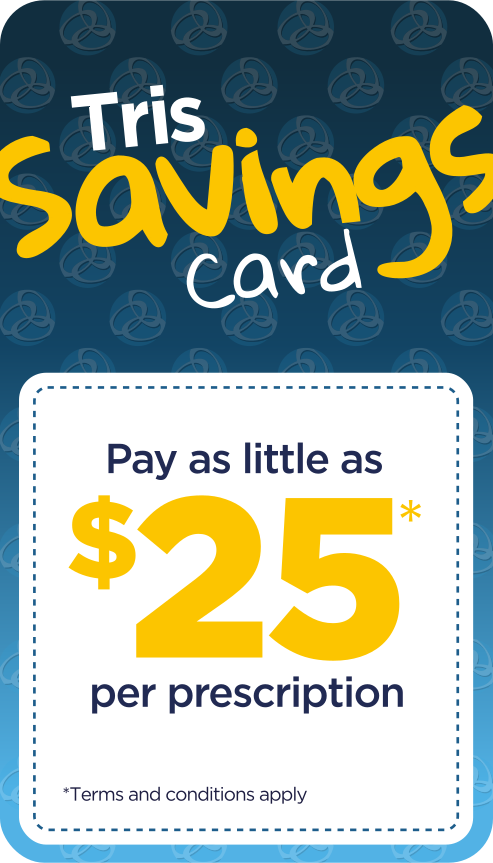
Eligible patients pay $25 per prescription*
Or text TRIS to TRIS4U (874748) for Mobile Savings Card.†

You Prescribe, We Deliver
ePrescribe DYANAVEL XR Tablets to Perigon Pharmacy 360 for guaranteed availability, patient support, free, fast delivery, and the lowest available price for your patients.
Request more information about DYANAVEL XR
Click below to sign up to receive more infomation about DYANAVEL XR
or request a visit from a Tris Pharma representative.
ADHD, Attention Deficit Hyperacticty Disorder; DSM-5-TR, Diagnostic and Statistical Manual of Mental Disorders, Fifth Edition, Text Revision.
References: 1. Faraone SV, Bellgrove MA, Brikell I, et al. Attention-deficit/hyperactivity disorder. Nature reviews disease primers. (2024); 10:11: https://doi.org/10.1038/s41572-024-00495-0. 2. Sibley MH, Arnold LE, Swanson JM, Hechtman LT, Kennedy TM, Owens E, Molina BSG, Jensen PS, Hinshaw SP, Roy A, Chronis-Tuscano A, Newcorn JH, Rohde LA; MTA Cooperative Group. Variable Patterns of Remission From ADHD in the Multimodal Treatment Study of ADHD. Am J Psychiatry. 2022 Feb;179(2):142-151. doi: 10.1176/appi.ajp.2021.21010032. Epub 2021 Aug 13. PMID: 34384227; PMCID: PMC8810708. 3. American Psychiatric Association: Diagnostic and Statistical Manual of Mental Disorders, 5th edition. Arlington, VA., American Psychiatric Association, 2013. 4. Faraone SV. The pharmacology of amphetamine and methylphenidate: Relevance to the neurobiology of attention-deficit/hyperactivity disorder and other psychiatric comorbidities. Neurosci Biobehav Rev. 2018 Apr;87:255-270. 5. Treatment of ADHD. Available at: https://www.cdc.gov/ncbddd/adhd/treatment.html 6. Miller C, Taskiran S. Child Mind Institute. What are Non-Stimulant Medications for ADHD? Available at: https://childmind.org/article/what-are-nonstimulant-medications-for-adhd/ 7. CHADD website. Treatment of ADHD. Available at: https://chadd.org/about-adhd/treatment-of-adhd/ 8. Faraone, SV, et al. The World Federation of ADHD International Consensus Statement: 208 Evidence-based conclusions about the disorder. (2021) 10.1016/j.neubiorev.2021.01.02.
